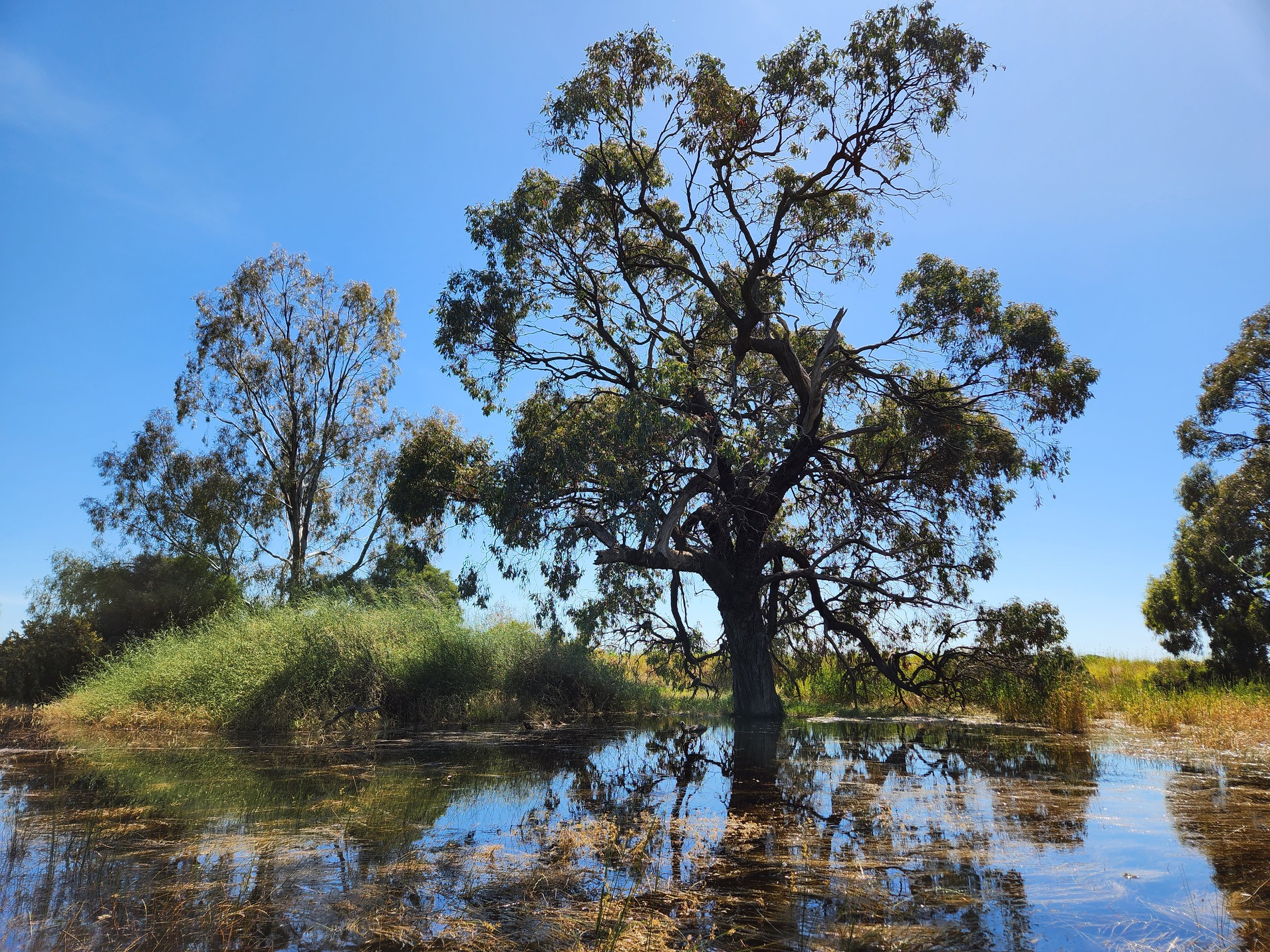
Circle T Wetland ©MDWWG
Circle T Wetland
-
PURPOSE
Circle T Wetland is a small 25 ha black-box runner on the Patho Plains and consists of remnant black-box and lignum near Gunbower VIC.
By supporting this wetland, environmental values for the surrounding area are enhanced as this wetland provides connectivity with Gunbower National Park and Kow swamp. Kow swamp has evidence of the world’s largest single population of human remains from the late Pleistocene era (120, 000 - 10, 000 years ago). This area is highly significant for First Nations People.
Circle T was identified as one of seven wetlands suitable for stiff groundsel (Senecio behrianus) plantings in 2025-2026. Stiff groundsel is a highly significant wetland plant species that is listed as Endangered Federally (EPBC Act 1999), Critically Endangered in Victoria (FFG Act 1988) and is Presumed Extinct in NSW (BC Act 2016).
Stiff groundsel plantings were undertaken by Wetlands Revival Trust as part of a larger project to improve the extent and viability of the Endangered (EPBC) wetland plant.
-
APPROACH
Working closely with the landholder, watering targets the natural depression that weaves through the farm using the extensive channel system allowing water to target different sections of the depression as required. Through a more natural wetting and drying cycle, this wetland benefits through improved vegetation quality and cover providing habitat for waterbird foraging and for frogs. Watering also supports stiff groundsel plantings helping to safeguard this species.
Low intensity grazing by sheep supports the control of annual weedy grasses, helping to support the growth of native plants.
-
OUTCOMES
The wetland site has a range of habitats supporting the growth of planted and remnant vegetation, and provides habitat for various water dependent species.
The primary management objectives for Circle T Wetland are:
Restoration of the black-box and lignum depression;
Support the growth of wetland vegetation including planted stiff groundsel; and
Provide habitat for waterbirds (including Brolgas), frogs, and other aquatic biota.
-
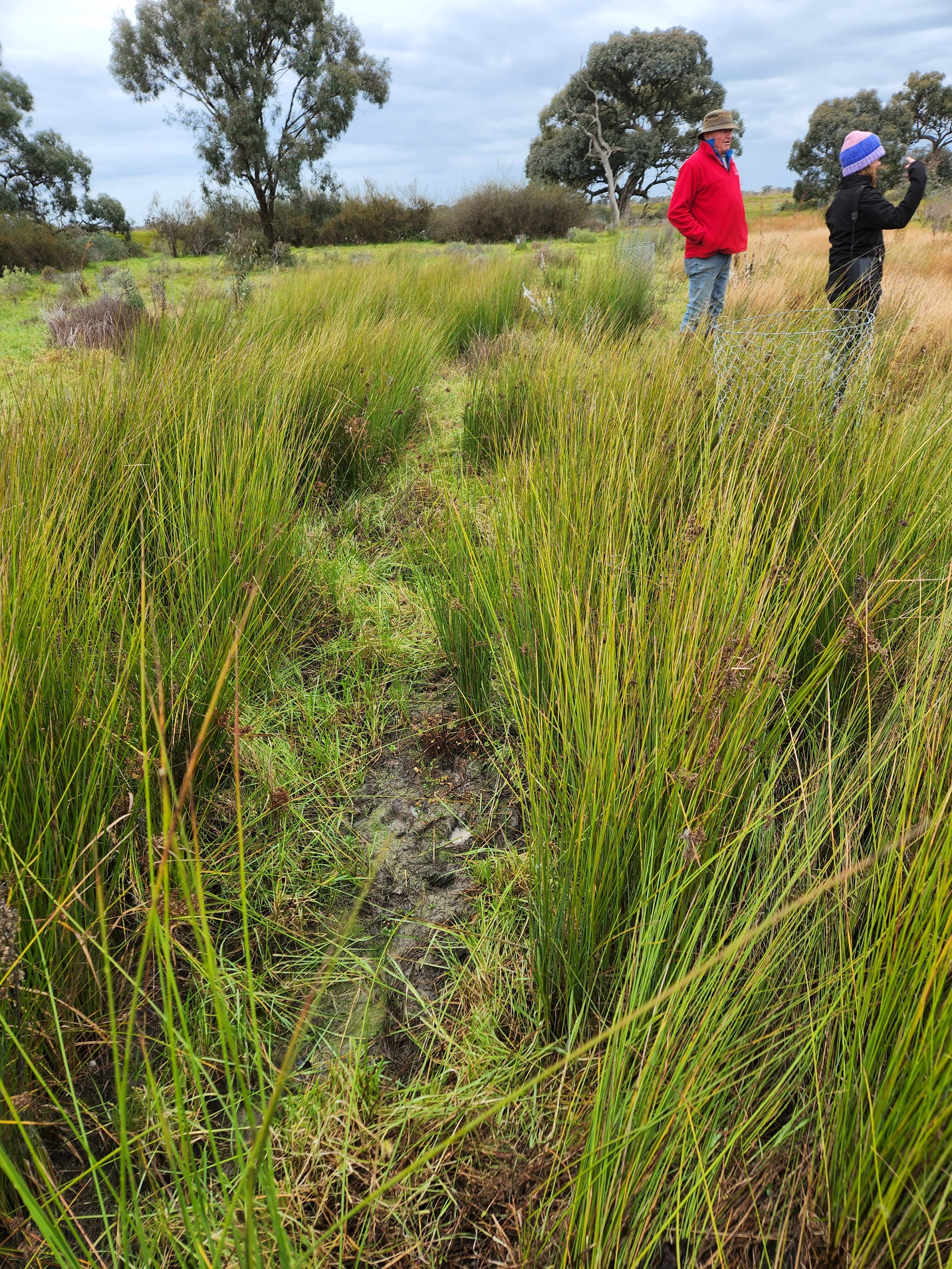
Monitoring wetland vegetation ©MDWWG

Watering starts at Circle T Wetland ©MDWWG

Sheep grazing is part of the management at Circle T wetland ©MDWWG

Circle T filling ©MDWWG
In partnership with: